
Knowledge base · Environmental claims
Sustainable packaging claims: evidence buyers should request.
Turn broad environmental language into a claim-by-claim evidence request covering the material, certification, recycled content, disposal route and market where the claim will appear.
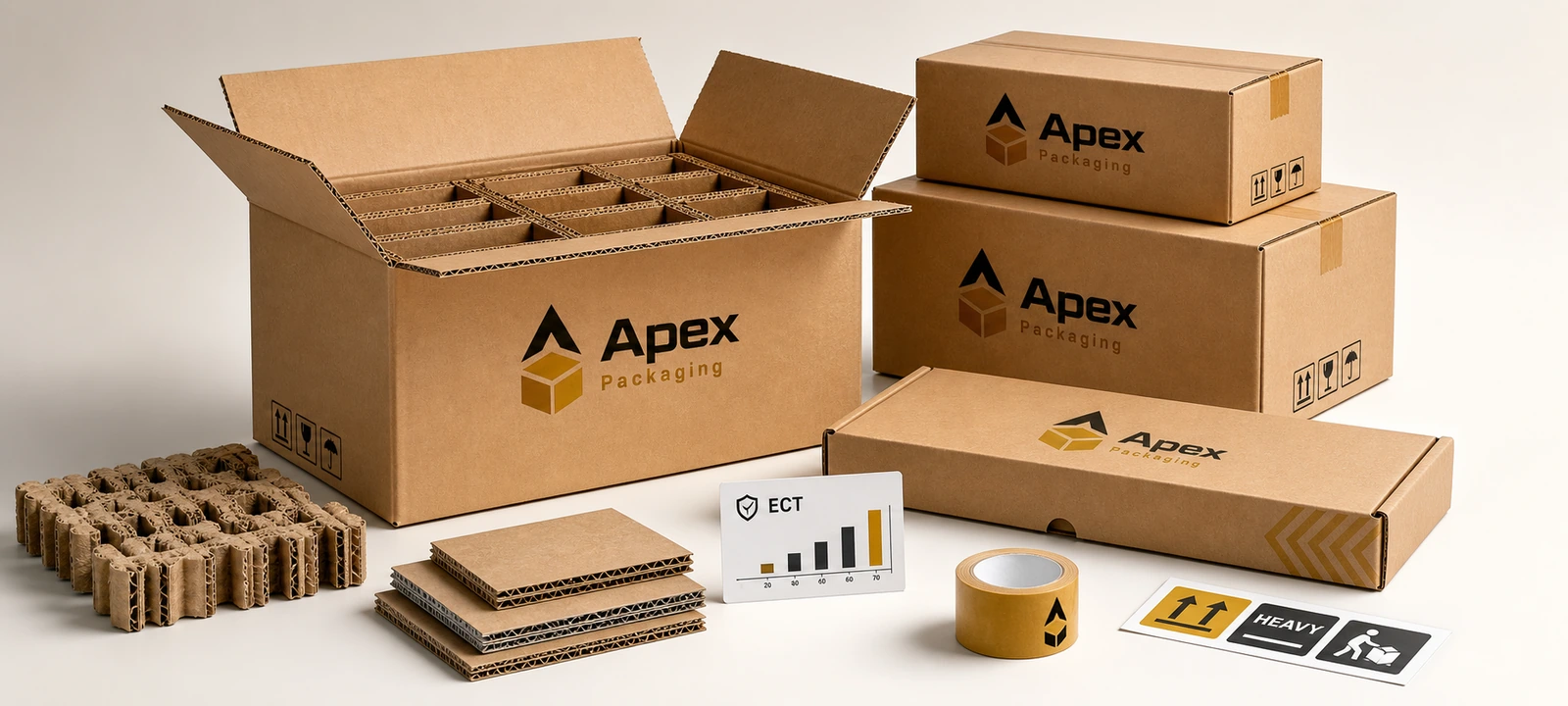
A sustainability claim is useful only when its wording, scope and evidence match. “Recycled,” “certified,” “recyclable,” “compostable” and “lower impact” describe different questions. A material invoice may support what was purchased, but it does not by itself prove that a finished package will be collected or processed in every customer market.
This article provides general procurement guidance, not a list of Apex certifications or an environmental guarantee. For a packaging quotation, send the intended claim wording, target markets, package components and evidence requirements with the product, artwork, quantity and destination.
Start with a claim register, not a list of preferred materials
Create one row for every environmental statement planned for the package, product page or sales sheet. Record the exact wording, the component it covers, the market where it will be used, who supplied the evidence, when that evidence expires or must be refreshed, and who approves the final claim.
Canada’s Competition Bureau advises businesses to consider both the literal meaning and the general impression of an environmental claim. Claims should be truthful, not misleading, properly tested or substantiated where required, and limited so they do not exaggerate the environmental benefit. That makes vague language such as “eco-friendly packaging” difficult to review unless it is replaced with a specific, supportable statement.
Screen material options before approving an environmental claim
Begin with the package's functional requirements: product compatibility, required protection, closure or sealing needs, print requirements, distribution route and the markets where disposal instructions will appear. For each candidate, document the complete construction, including the substrate, coatings, laminations, adhesives, labels and closures.
Then evaluate each proposed environmental claim against evidence for that exact construction. A material name, fibre or resin description, certification reference, or “compostable” label does not by itself establish recyclability, compostability or lower overall environmental impact in every market.
Match the evidence to the type of claim
| Claim type | Evidence to request | Questions the evidence must answer |
|---|---|---|
| Material identity | Material specification, bill of materials or supplier declaration tied to the order | Which component and layer does it cover? Is the grade or resin identified? |
| Recycled content | Percentage, calculation basis, pre- or post-consumer definition, production scope and supporting supplier or third-party records | Is the percentage by weight, component or whole package? Does it cover this order? |
| Forest certification | Valid certificate details, chain-of-custody claim and approved label or claim where applicable | Which organization is certified? Does the transaction and artwork use the correct claim? |
| Recyclability or disposal | Package construction plus evidence for collection, sorting and processing in the target market | Are labels, coatings, windows, closures and residues included in the assessment? |
| Compostability | Applicable certification or test evidence, facility or home-composting scope, and disposal instructions | Under what conditions and in which collection system does the claim apply? |
| Comparative benefit | Defined baseline, method, data period, boundary and calculation records | Compared with what package, on which metric, and over what life-cycle stages? |
Check certification scope and chain of custody
A logo on a sample is not enough. For an FSC-related claim, buyers should confirm the certificate holder, certificate status, product scope and chain-of-custody claim associated with the supplied material or finished package. Artwork use and transaction documents also need to follow the applicable FSC requirements. FSC certification does not automatically establish recyclability, compostability or recycled-content percentage; those are separate claims.
If a supplier refers to another certification, request the scheme owner, certificate number, current status, certified site and products, claim wording, and any conditions on logo use. Verify those details with the scheme owner’s official database rather than relying only on a PDF sent with the quote.
Review disposal claims in the customer’s actual market
“Technically recyclable” and “accepted in the customer’s local program” are not the same statement. Document the complete package: substrate, laminations, coatings, adhesives, windows, labels, closures and likely product residue. Then check how that construction is collected, sorted and processed where the claim will appear.
A disposal instruction should also be usable. If a customer must separate components, remove a liner or take the pack to a special collection point, say so clearly and verify that the route exists in the named market. Do not turn a regional or conditional route into a universal claim.
Use a claim-specific buyer checklist
- Write the exact proposed claim and identify every place it will appear.
- Define the component, layer or complete package covered by the claim.
- Record the target country, province, state or collection market.
- Ask for the test, calculation, certificate or transaction records that directly support it.
- Confirm the evidence applies to the quoted specification and production site.
- Check dates, certificate status, exclusions and permitted logo or claim wording.
- Review the general impression created by imagery, colours and nearby statements.
- Set an owner and review date so claims are reassessed after a material, supplier or market change.
Hypothetical evidence review
Hypothetical example: a carton is described as “made with 80% recycled material and recyclable.” The buyer should split this into two reviews. For recycled content, confirm whether 80% applies to the paperboard component or the whole assembled package, the calculation basis, and the records covering the quoted production. For recyclability, document the board, coating, window, adhesive and residue, then verify the disposal claim for the markets where the carton will be sold. Passing one review does not prove the other.
What to send with a packaging enquiry
- Product and package format, dimensions, weight and intended route.
- Target markets and the exact environmental statements being considered.
- Required certification scheme or evidence format, if prescribed by your policy or customer.
- Artwork showing claim placement, logos and disposal instructions.
- Quantity, delivery destination and any change-control or record-retention requirements.
Use the 12-field packaging RFQ template for the broader project brief. For FSC-specific due diligence, see the FSC corrugated-box verification guide. Keep claim approval separate from package pricing so an attractive quote is not mistaken for substantiation.
After defining the evidence requirements, use Apex's packaging materials and sustainability requirements page to prepare a product-specific enquiry.
Frequently asked questions
What evidence should support a recycled-content claim?
Ask which packaging component the claim covers, the percentage and calculation basis, the applicable production period or order, and the supplier or third-party records that support it.
Does an FSC claim prove that a package is recyclable?
No. An FSC claim concerns certified forest-based material and chain-of-custody controls. Recyclability and local collection or processing are separate claims that need their own evidence and geographic scope.
Can a package be called recyclable everywhere?
That should not be assumed. Buyers should define the market where the claim will appear and verify collection, sorting and processing conditions, as well as the applicable advertising and labelling rules.
Primary references
- Competition Bureau Canada: Environmental claims and greenwashing guidance for businesses
- Competition Bureau Canada: Environmental claims and greenwashing resource hub
- Forest Stewardship Council: Chain of Custody Certification standard record
- Forest Stewardship Council: FSC claims, labels and logo guidance
- Innovation, Science and Economic Development Canada: Environmental labels and claims
Related
Put the claim requirements into the packaging brief.
Send the package specification, target markets, proposed claim wording, evidence requirements, quantity and destination for a project discussion.