
Best For
- •Engine components
- •Fasteners and clips
- •Aftermarket kits
- •OEM plant shipments
Custom Auto Parts
Packaging details
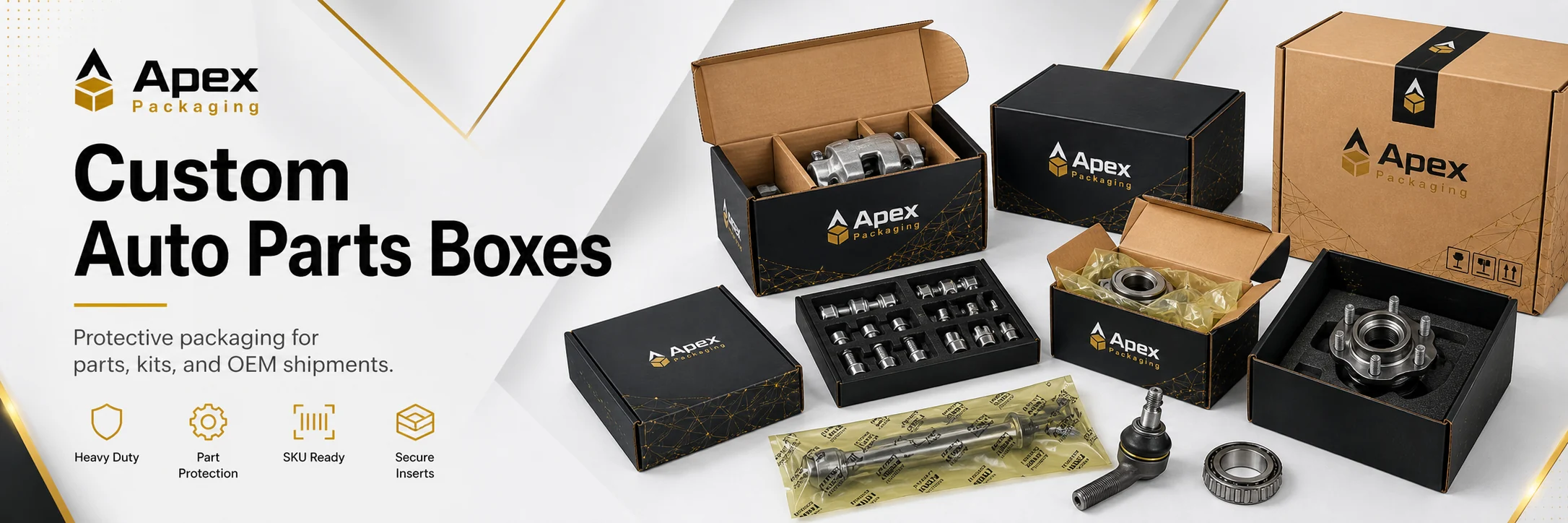
Custom auto parts packaging boxes for product protection and identification. Apex starts with dimensions, product weight, retail or shipping use, print goals, and target quantity. From there, the team recommends structure, board grade, print method, and sample path.
How Apex manages it
Corrugated grade selected by part weight and pallet stack
Custom inserts keep parts from shifting in transit
VCI options for ferrous metal corrosion control
Send dimensions, quantity, artwork, product weight, and launch date. Apex will return a practical material, structure, and pricing recommendation.
Buyer questions
Straight answers to the questions buyers ask before requesting a custom packaging quotation.
Packaging buyer questions
Provide part drawings, unit mass, sharp edges, surface treatment and the planned container quantity.
Identify no-contact zones and approve restraints that support the part without rubbing critical finishes.
Identify the metal types, cleaning process, storage duration and sealing conditions for a compatibility review.
Assign a dedicated compartment and part identifier to each component in the kit layout.
Specify an appropriate containment liner and test the packed assembly for leaks and board exposure.
Obtain approval of part orientation, count, line-side access and the customer’s handling specification.
Reserve readable label panels for the required part, revision and lot identifiers in the receiving format.
Confirm loaded case weights, pallet arrangement and corrosion-protection duration for the actual cross-border route.
Share the product size, material preference, quantity, and target delivery date. Apex will recommend the right box structure and print path.