
Knowledge base · Corrugated
Kraft vs white corrugated - cost, print quality, and sustainability.
The right liner is not just a design preference. It affects ink coverage, quote assumptions, shelf presentation, sustainability paperwork, and how the package looks after freight.
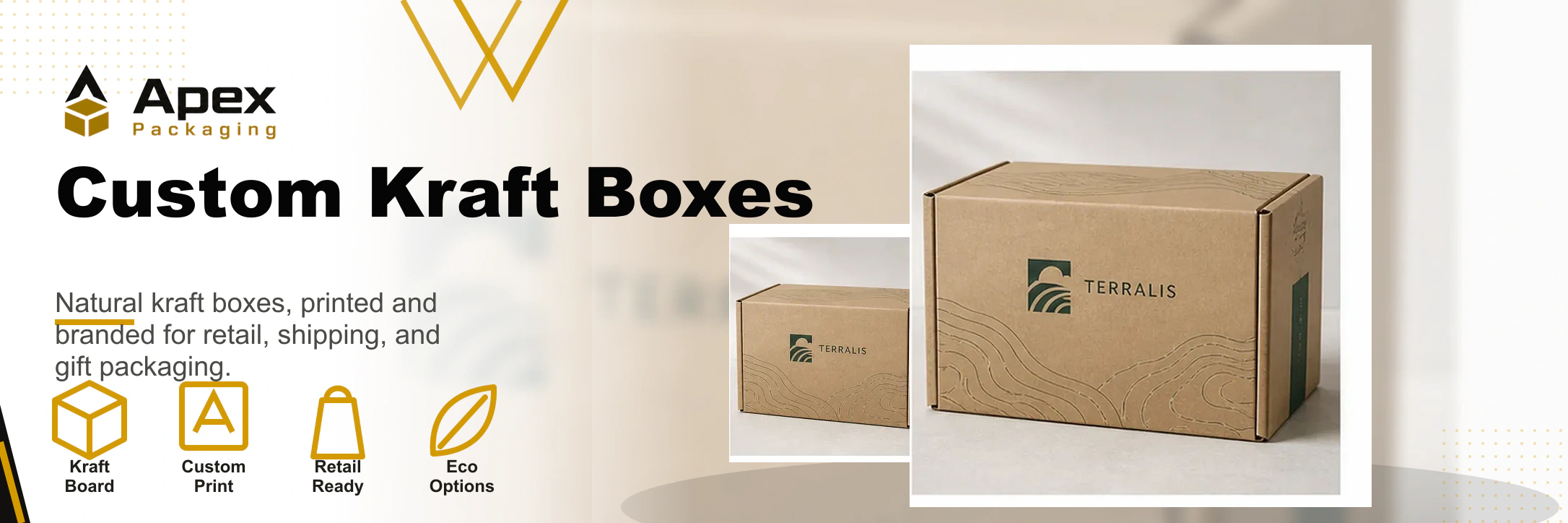
Kraft vs white corrugated is one of the first decisions buyers face when quoting custom boxes. Kraft liner gives a natural brown board appearance and often supports lower-coverage print programs. White liner gives a cleaner surface for colour, brand panels, and retail presentation. The better choice depends on where the package is seen, how much ink is needed, and what documentation the buyer needs behind sustainability claims.
Apex Packaging Solutions quotes both options across custom corrugated boxes, mailer boxes, ecommerce shippers, and low-MOQ packaging programs. This guide gives procurement teams a practical way to choose before artwork, samples, and pricing start moving.
Use kraft when the package can look industrial, natural, or low-ink
Kraft corrugated is the familiar brown board used in shipping cartons, many subscription mailers, and industrial packaging. It works well when the box is mostly a transport package or when the brand wants an understated, recycled-material look. Black ink, one-colour logos, shipping icons, and simple panel markings usually read well on kraft.
Kraft can also reduce unnecessary print coverage. If the product ships B2B, moves through a warehouse, or reaches a customer who values plain recyclable packaging, a simple kraft box may be the smarter choice. The buyer should still specify board grade, flute, ECT rating, and inside dimensions. Liner colour does not replace structural specification.
Use white liner when colour and panel clarity matter
White corrugated gives the designer a cleaner surface. Brand colours, gradients, small copy, QR codes, and product messaging usually hold better on white than on brown kraft. This matters for ecommerce unboxing, retail-ready displays, influencer kits, and high-value product shipments where the package is part of the buyer experience.
White liner can also reduce the need for heavy flood coats. Instead of printing a white background or label over kraft, the board itself provides the clean panel. On some jobs, that can simplify the print file even if the board is more expensive. The real cost comparison should include board, ink, setup, waste, and whether labels or sleeves are being replaced by direct print.
The quote comparison should include more than board price
| Decision point | Kraft corrugated | White corrugated |
|---|---|---|
| Print contrast | Best for black, dark colours, and low-coverage marks | Better for colour accuracy and small details |
| Brand signal | Natural, practical, recycled-content feel | Cleaner retail and ecommerce presentation |
| Cost pressure | Often lower board and print complexity | May cost more but reduce labels or ink coverage |
| Sustainability review | Looks recycled, but claims still need proof | Can still be recyclable or FSC, but needs documentation |
Do not assume kraft automatically proves sustainability
A brown box can look more sustainable, but procurement teams need more than appearance. Ask for FSC status, recycled-content options, and any chain-of-custody paperwork required by your customer. If the package carries an environmental claim, the claim should be supported by supplier documentation rather than colour alone.
The same applies to white liner. A white box may still use certified fibre, recycled content, or a recyclable structure. The buyer should confirm the material path instead of treating the liner colour as the sustainability answer. Apex's sustainable packaging options page explains the documents and material questions to raise before a production run.
Send artwork early if print quality drives the decision
If the design uses brand colours, product photography, small type, or a barcode, send the artwork before locking the board choice. A design that looks clean on white may become muddy on kraft, while a simple black logo may look stronger and more honest on kraft. The converter can also flag whether flexo, digital, or label application is the best route for the quantity.
For a first quote, send dimensions, quantity, board strength target, print coverage, and whether kraft or white is preferred. If you are unsure, ask for both options. The right comparison will show the total packaging cost, not just the liner upcharge.
Related
Need kraft and white pricing side by side?
Send dimensions, quantity, artwork, and delivery details. Apex can quote both liner options with the production trade-offs called out.