
Knowledge base · Subscription packaging
Subscription mailer boxes: packout and reorder planning.
Plan the mailer around the combinations that actually ship, the work required at the packing bench, and the controls needed to repeat the pack month after month.
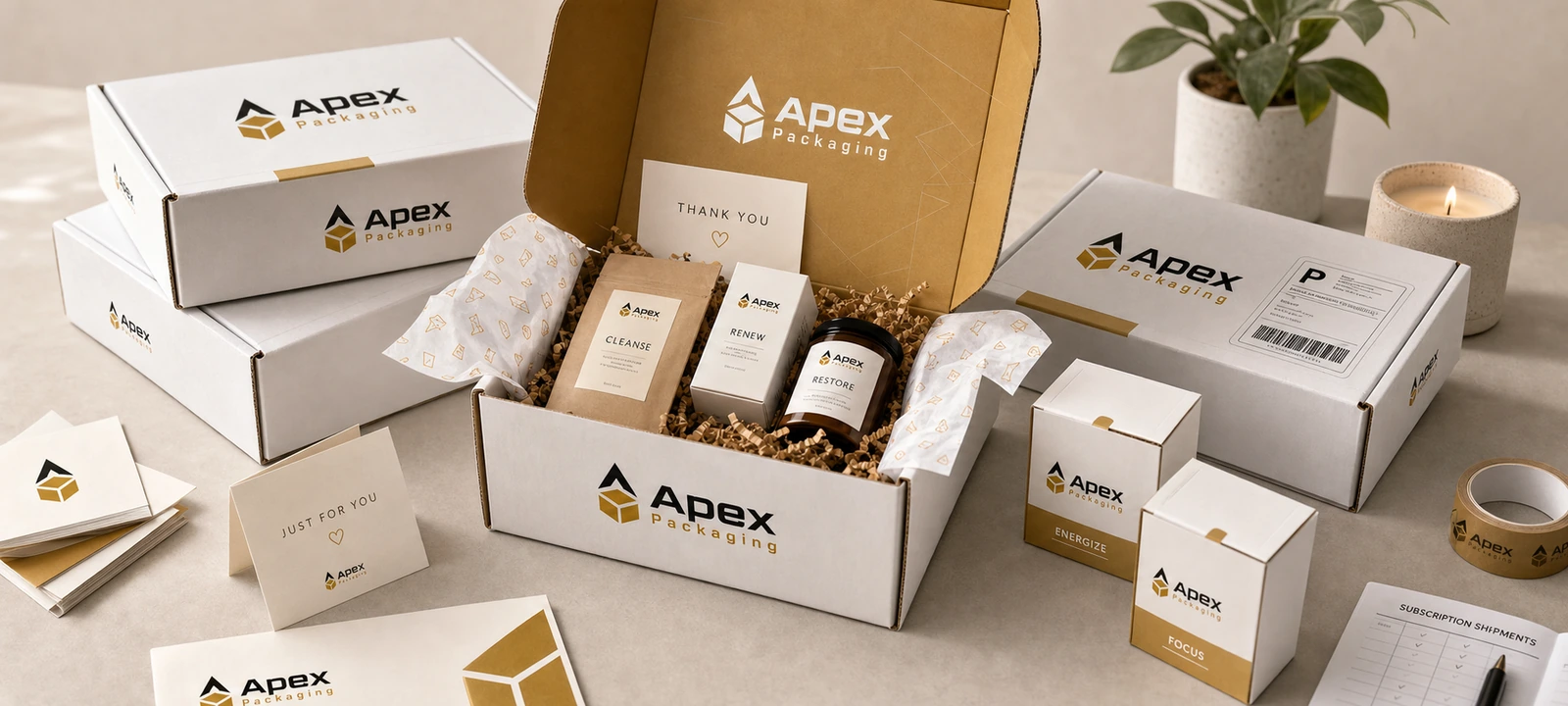
A subscription mailer is a repeatable packing system, not just a branded box. The contents can change by month, customer tier or promotion, while the team still needs a box that assembles cleanly, protects the approved combinations and can be reordered without rebuilding the specification. Before requesting pricing, map the likely SKU combinations, the packout sequence and the distribution route.
For a purchasing enquiry, review Apex’s custom mailer boxes and send the product list, packed dimensions, quantity, artwork status and delivery destination. The planning method below helps turn those details into a clearer brief.
Map changing SKU combinations before choosing the box
Start with a packout matrix. Put every product on one axis and each planned subscription combination on the other. Record quantity, orientation and packed weight for each combination. Then identify three useful test cases:
- Fullest packout: the combination that uses the most internal space or creates the tallest stack.
- Heaviest packout: the combination with the highest finished shipment weight.
- Movement-prone packout: the combination most likely to leave open space or let contents collide.
Those cases may be different. Packed weight alone cannot determine the box construction, just as the largest item alone cannot establish the internal fit. Product support, empty space, orientation, closure and the expected handling environment all matter.
Control movement without making packout complicated
Open space is not automatically a failure, but uncontrolled movement can damage products, scuff decoration or change the unboxing order. Compare the simplest ways to hold the approved combinations: a revised box size, a folded corrugated or paperboard insert, dividers, tissue or another suitable protective system. The right choice depends on the products and the distribution risks; it should not be selected from appearance alone.
If one mailer must carry several combinations, define which packouts are approved and how each is stabilized. If the adjustment takes many loose pieces or relies on judgement at the bench, a second mailer size may be easier to repeat than one “universal” pack.
Design the packing sequence as well as the unboxing sequence
Write the steps in the order an operator performs them: erect the mailer, add the first insert or protective layer, load products, add literature, close, seal and label. During a sample run, look for tabs that catch, panels that spring open, items that must be forced into place and labels that cross a fold or closure.
Hypothetical example: a monthly pack contains two bottles, a carton and a printed card. Version A uses a loose filler around all four items. Version B uses one folded insert with defined cavities. The correct choice is not whichever looks cleaner in a rendering; compare assembly steps, product restraint, removal experience, material use and validation results with the actual products.
Use a revision-controlled approval checklist
- Confirm internal dimensions with the complete packed contents.
- Record the construction and board specification supplied for the sample.
- Check the fullest, heaviest and movement-prone approved combinations.
- Verify artwork orientation, variable-date areas, barcode or label zones and closure clearance.
- Time a small trial packout and note where assembly instructions are needed.
- Inspect opening, product removal and disposal of loose components.
- Define objective acceptance criteria for appearance and product condition.
- Apply a distribution test plan appropriate to the actual shipment route.
ASTM D6198 treats transport-package design as a process that considers handling, storage and transportation hazards. ASTM D4169 and D7386 provide laboratory frameworks for distribution or single-parcel testing, but the buyer and testing professional still need to select a test plan and acceptance criteria that match the real system.
Plan reorders around consumption and change control
Forecast mailers by shipment count, not subscriber count alone. Include expected replacements, packing damage, promotional kits and the mix of box sizes. Record the lead-time assumptions used in the purchase plan, then set an internal reorder point using actual consumption and the supplier’s current quotation rather than a permanent rule of thumb.
When comparing quotations for subscription mailer boxes, use the same finished dimensions, corrugated board specification, print coverage, inserts, tooling, sampling, packing requirements and freight assumptions for each option. Separate one-time setup charges from recurring production costs, and compare quantity tiers using consistent specifications. This helps buyers understand cost differences without overlooking packaging performance or delivery requirements.
Keep one approved specification package with the dieline, artwork version, board and construction description, sample approval, packing instructions and delivery configuration. A product, artwork or route change should trigger a documented review. Small changes can alter fit even when the external box dimensions stay the same.
What to send with a subscription-mailer RFQ
- Every planned SKU combination, with product dimensions, quantities and packed weights.
- Photos of the intended arrangement and any fragile, leak-prone or scuff-sensitive areas.
- Current box size, problems and damage evidence, if this is a redesign.
- Artwork files, inside/outside print needs and variable label zones.
- Order quantity by size, expected shipment cadence and delivery destination.
- Packing method, sealing method, carrier route and validation requirements.
The 12-field packaging RFQ template provides a structured way to send those details. Do not lock a board grade or test level from one variable; ask the supplier to state the complete proposed specification and the evidence used to support it.
References and testing resources
Related
Plan the subscription mailer around the real packout.
Send the approved SKU combinations, packed dimensions, artwork, quantity and delivery destination for a project quotation.