
Skip to content
Order with
confidence.
Project support from
concept to delivery.
Secure
packaging.
Protected delivery.

Parcel economics

Check Dimensional Weight Before Approving a Parcel Box

A smaller box helps only when packed dimensions, carrier calculation and product protection work together.

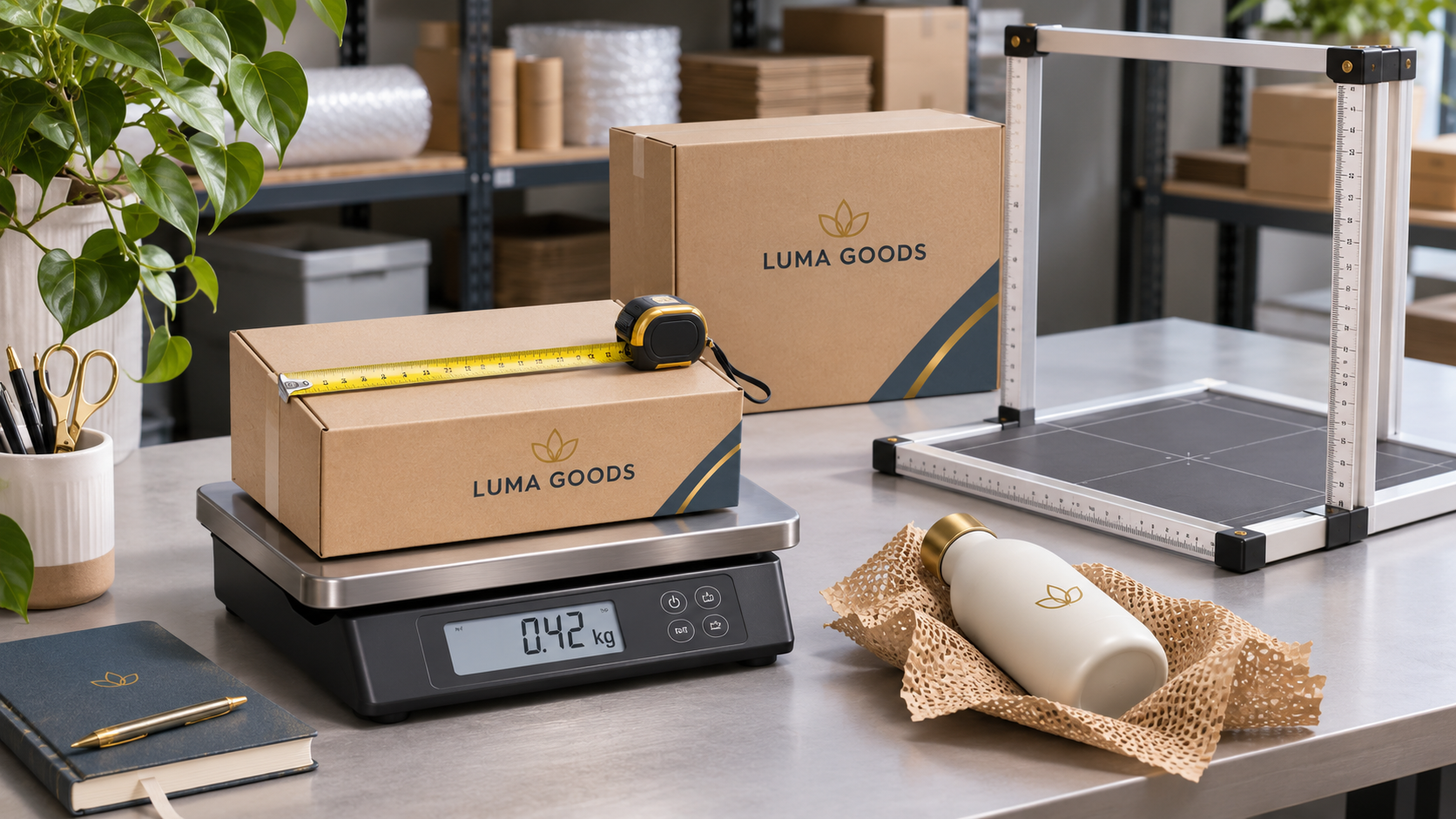
Fictional Luma Goods parcels being measured and weighed for dimensional billing

BUYER GUIDE · November 14, 2026 · PRACTICAL DECISION TOOL

Carrier billing uses the finished parcel, including bulge and rounding. Compare sealed outside dimensions with actual weight, account rules and protection performance.

L × W × HPacked outside volume used in the calculation
139Illustrative US daily-rate divisor
2 sizesEvaluate only when order frequency supports them

ACCOUNT RULES

Start with the actual shipping service

Confirm origin, destination, service, account terms, units, divisor and rounding method. A divisor copied from one US example is not a universal Canadian rule.

Compare dimensional and actual weight, then price both candidate parcels through the same account and route. Another charge may still determine the total.

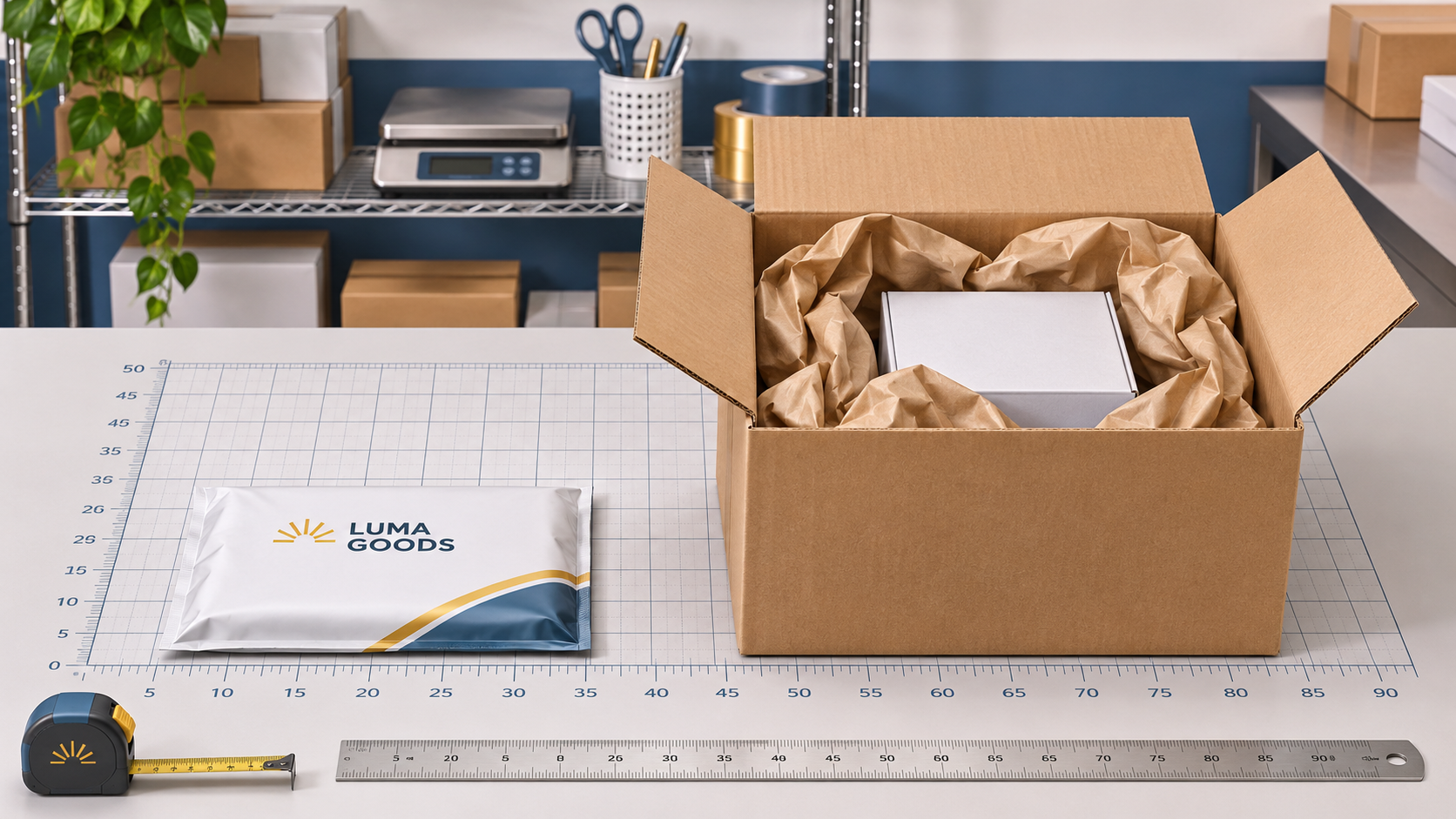
Compact fitted Luma Goods parcel compared with an oversized void-filled box
Measure the sealed parcel. Interior box dimensions do not determine carrier billing dimensions.

WORKED EXAMPLE

Rounding moves one parcel into another billing step

Hypothetical samples weigh 4 lb. Assume dimensions round up to whole inches, a 139 divisor and dimensional weight rounds up to whole pounds.

MeasureSample ASample B
Measured outside12.2 × 9.2 × 4.2 in11.8 × 8.8 × 3.8 in
Rounded size13 × 10 × 5 in12 × 9 × 4 in
Volume ÷ 1394.68 lb3.11 lb
Dimensional weight5 lb4 lb
Billable comparison5 lb4 lb

This demonstrates calculation mechanics, not a freight quote. If actual weight were 6 lb, both would remain 6 lb in this comparison.

02

MEASUREMENT

Use several sealed production packouts

Measure the fullest normal order with the intended insert, closure and product arrangement. Include bulge and ask what production variation the structure can hold.

Reject a reduction that compresses a vulnerable product, removes required clearance or bows the lid. Freight optimization cannot override protection.

03

ORDER MIX

Decide whether a second size earns its complexity

Split recent orders into single-item, normal multi-item and largest regular baskets. Compare frequency, freight, packaging cost, pack time and damage risk.

Apply the verified saving only to orders that actually fit the smaller package, then subtract extra inventory, tooling and obsolescence costs.

RELEASE CONTROL

Parcel-size approval

Keep the decision with the specification, named sample and purchase record so the next order does not restart from memory.

Internal fit and packed external targets are stated separately.

Product arrangement, insert and closure match the measured sample.

Carrier service, divisor, units and rounding assumptions are attached.

Protection and handling checks pass at the reduced size.

Board, structure or packout changes trigger remeasurement.

SOURCE NOTES

Use current requirements for the actual project

These references support the decision framework. Supplier capabilities, carrier rules, retailer requirements and acceptance limits must be confirmed for the individual order.

NEXT STEP

Bring the numbers into the packaging brief

Apex Packaging Solutions coordinates custom packaging design, sampling, overseas production and delivery for Canadian and US buyers.

Discuss your project →Explore mailer boxes