
Knowledge base · Packaging quotes
Packaging cost drivers - what changes a custom box quote in Canada.
A packaging quote changes when the structure, board, print, finish, quantity, sampling, freight, or timeline changes. A cleaner RFQ helps buyers compare the real cost, not just the first unit price.
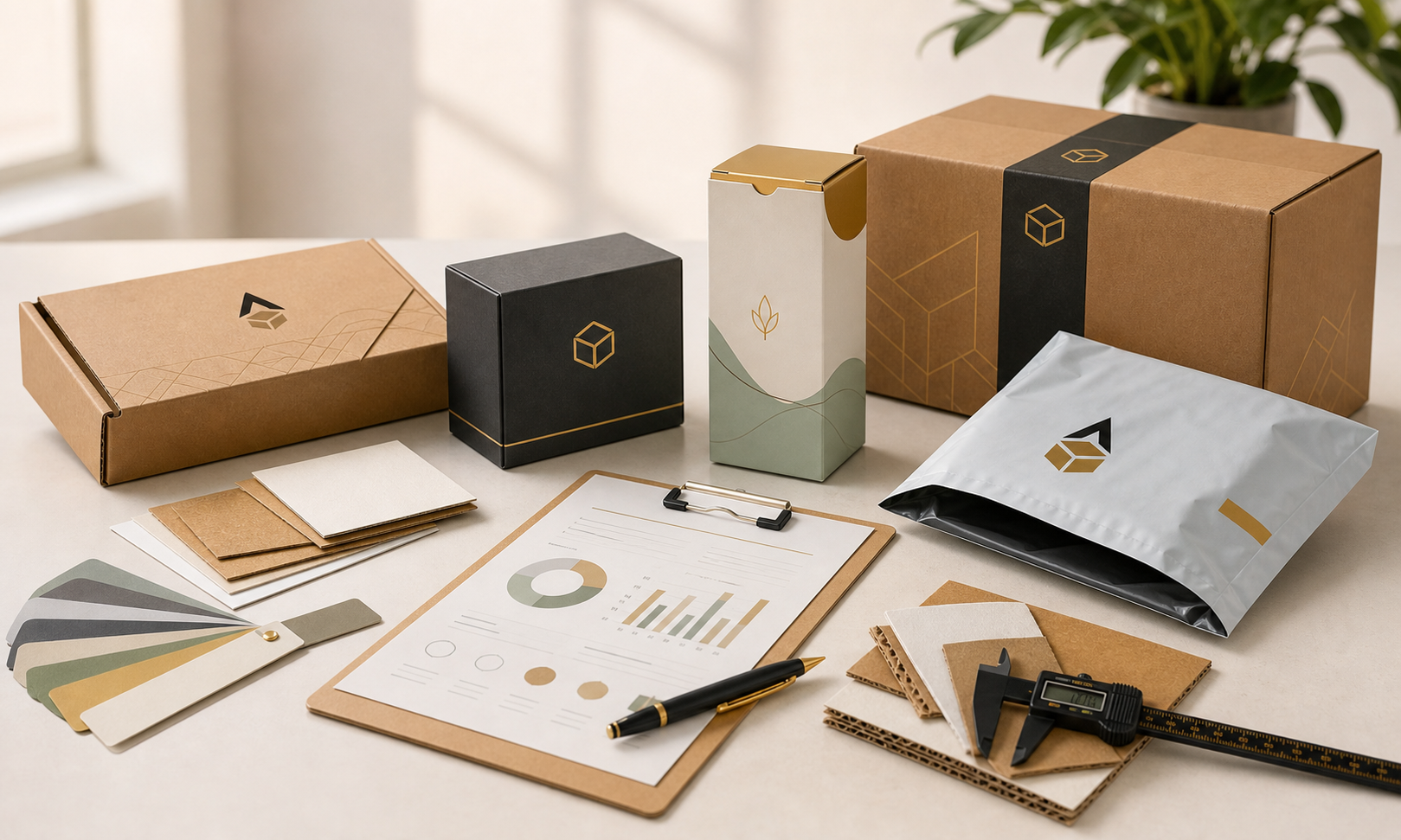
Packaging cost drivers matter because two quotes that look similar may not include the same assumptions. One supplier may price a simple kraft shipper, another may assume full-colour print, tooling, inserts, samples, and freight. Without a clear specification, buyers can end up comparing different packages and making decisions on incomplete numbers.
Apex Packaging Solutions quotes corrugated boxes, mailer boxes, polybags, protective packaging, and premium product packaging for Canada and the USA. This guide explains what changes price and what to send before asking for production pricing.
Size and structure set the baseline
Packaging cost starts with size and structure. A small change in dimensions can affect board usage, sheet layout, die requirements, freight cube, and pallet efficiency. A regular slotted carton, mailer box, folding carton, tray, sleeve, rigid box, and display box all use different conversion methods and different setup assumptions.
Send inside dimensions whenever possible. If the package must fit a product, send the product dimensions and packed weight too. The supplier can then recommend clearance, board strength, insert needs, and whether the size creates avoidable waste.
Material and board grade change both cost and performance
Kraft, white liner, paperboard, corrugated, rigid board, LDPE, HDPE, LLDPE, foam, and specialty films all price differently. Board grade also matters. ECT-32 and ECT-44 do not serve the same stacking requirement. A low-cost material can become expensive if it increases damage, returns, or customer complaints.
| Cost driver | Why it changes price | What to send |
|---|---|---|
| Order quantity | Setup, tooling, waste, and purchasing power spread across more or fewer units | First order quantity and expected reorder cadence |
| Print coverage | One-colour marks, full panels, coatings, and colour targets require different production paths | Artwork files, brand colours, and finish expectations |
| Tooling and structure | Custom dies, inserts, windows, handles, and complex folds add setup work | Box style, sample photos, or a dieline if available |
| Freight and timeline | Bulky packaging and rush production can shift total landed cost | Delivery location, deadline, and pallet or parcel requirements |
Print, finish, and artwork status affect lead time
A plain kraft carton is not priced like a premium printed mailer. Print coverage, ink system, lamination, foil, embossing, spot UV, barcode placement, and artwork readiness all affect cost and timing. If artwork is not print-ready, the quote may need design support, dieline revision, prepress checks, or additional proofing.
Buyers can avoid delays by sending vector logos, colour targets, barcode requirements, legal copy, and any customer compliance rules with the first request. If the package needs bilingual copy, warning statements, or retail panel hierarchy, mention that before the dieline is finalized.
MOQ should be balanced against inventory risk
Higher quantities usually reduce unit cost because setup is spread across more units. But the lowest unit price is not always the best business choice. Slow-moving inventory, SKU changes, artwork updates, or seasonal packaging can make a large order more expensive over time. A strong quote includes the first run, reorder timing, and expected annual volume.
Conclusion
The fastest way to get a reliable packaging quote is to send a complete RFQ: size, product weight, quantity, material preference, artwork status, print requirements, delivery location, timeline, and any inserts or sustainability needs. Apex can then price the real package and flag where cost can be reduced without weakening protection or brand presentation.
Related
Need a cleaner packaging quote?
Send Apex your size, quantity, artwork status, material target, and delivery location. The team will flag missing cost drivers before production.