
Corrugated box quality
Corrugated Box Sample Approval Checklist Before Production
Approve the packed system, production specification and acceptance record, not just an empty sample that looks correct.
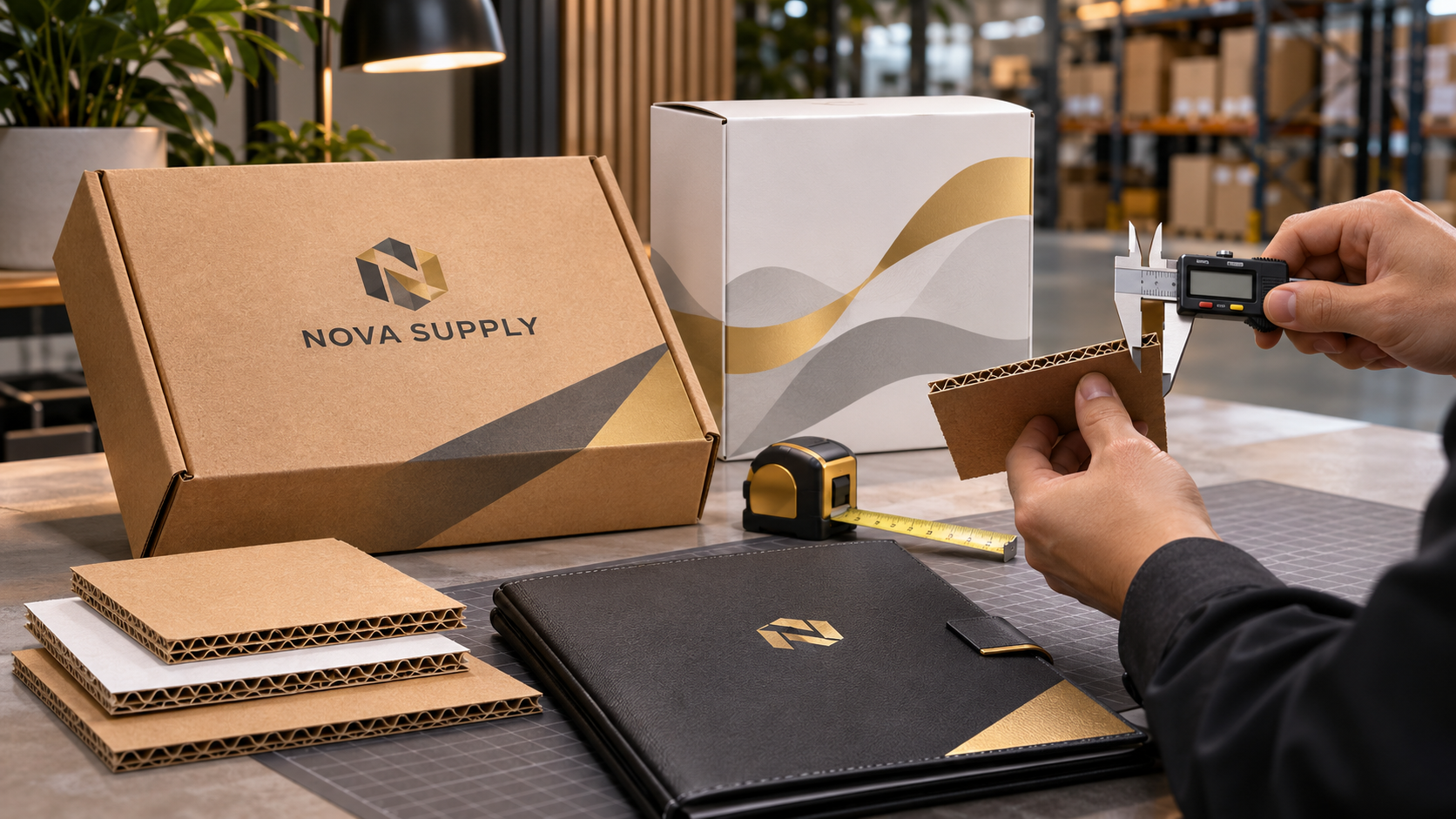
A sample is the last inexpensive place to find a packaging mistake. The approval must represent how the box will be erected, packed, sealed, handled and identified in production.
THE APPROVAL PATH
Six gates before production release
Identity
Match the sample to its dieline, board, dimensions and artwork revision.
Pack
Load the real product, inserts, literature and void fill.
Measure
Record packed weight and outside dimensions after closure.
Operate
Run erection, filling and sealing at normal packing speed.
Inspect
Check print, barcode, labels, scores, seams and opening.
Release
Sign the exact sample and production specification.
GATE 01–02 · IDENTITY + FIT
Make the sample traceable, then pack the real configuration
Label the sample with the supplier, date, dieline or style reference, inside dimensions, board construction and artwork revision. State whether it is a plain structural sample, a digital mock-up or a production-equivalent sample. A white sample can prove fit, but not necessarily production colour, coating, scoring or registration.
Load production-representative products, inserts, bags, literature and void fill. When one box serves several SKUs, test the largest, smallest and heaviest configurations. The product should load without forcing the walls and remain controlled when the closed box is turned through every orientation.
Review corrugated box options →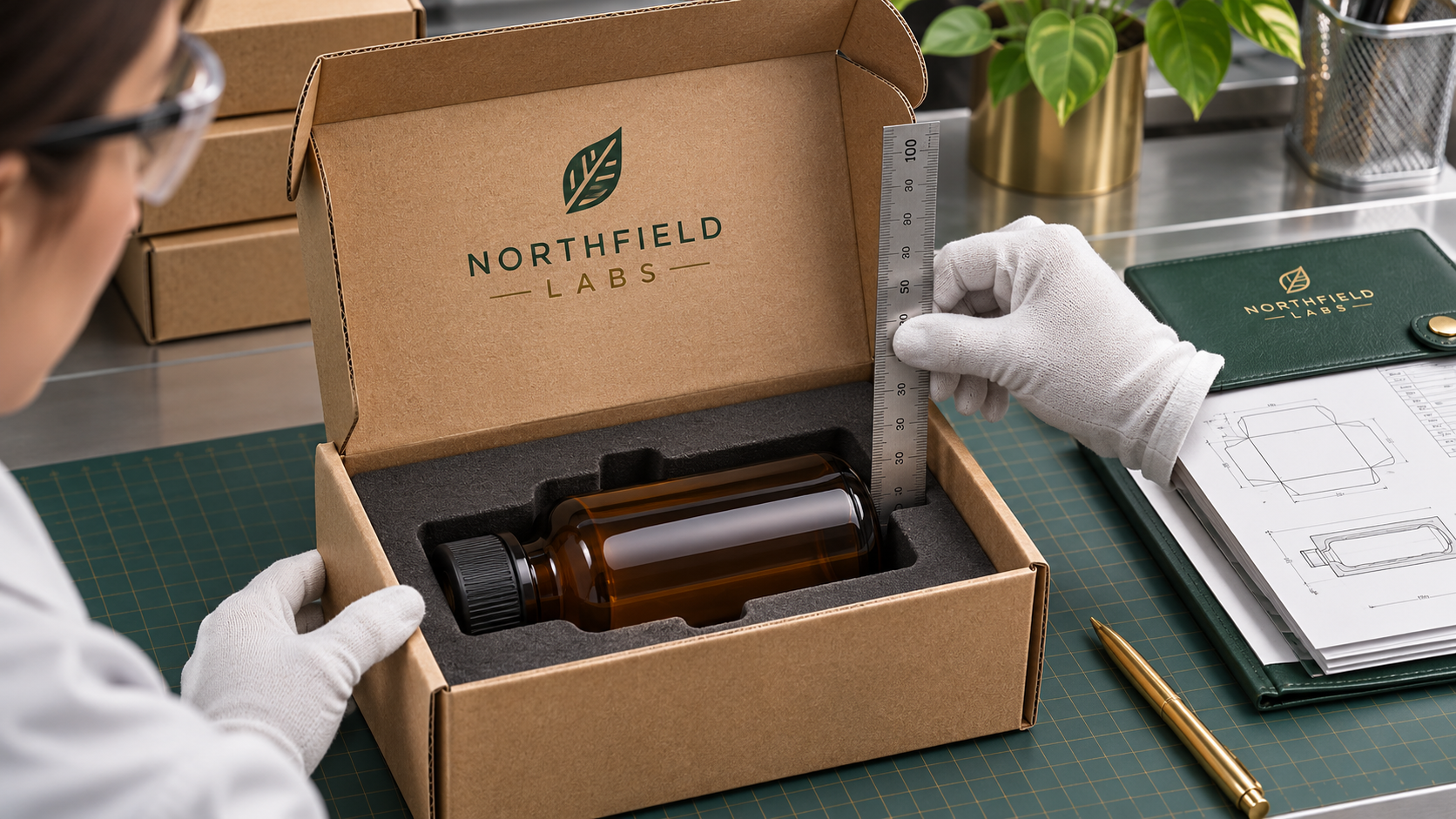
GATE 03 · PACKED WEIGHT
Test the shipment you will actually send
Use the intended tape width and pattern, adhesive, staples or locking features. Then measure and weigh the fully closed package. Reopening a test box changes its condition; use a fresh sample for subsequent handling checks.
GATE 04–05 · PACKOUT + PRINT
Run the line, close the box and inspect every panel
Ask the people who will use the packaging to erect, fill and seal it at normal speed. Watch for slow locks, awkward hand movements, flap gaps, bulging and inconsistent tape placement. A structure that works only when handled delicately is not production-ready.
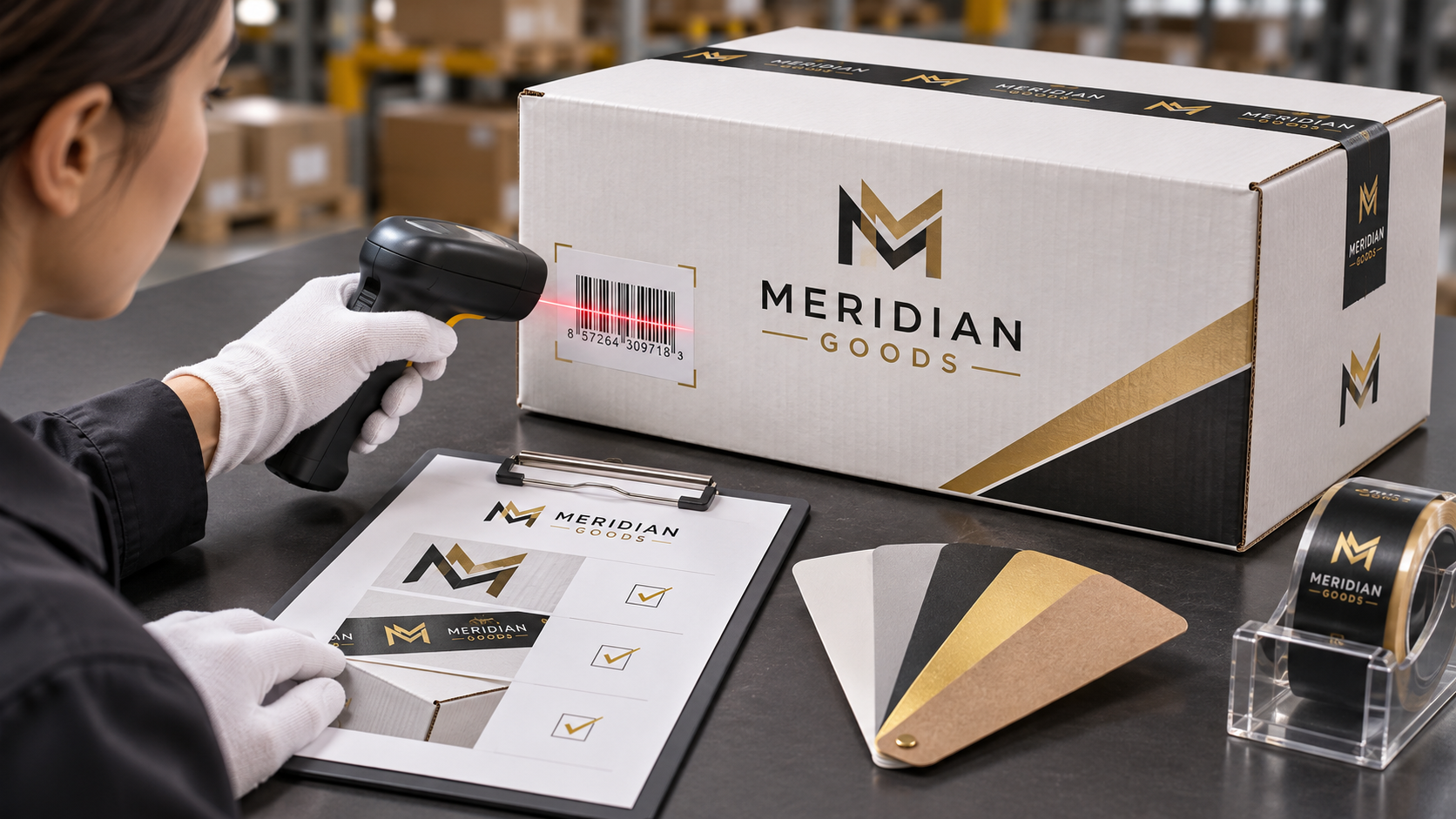
Compare every printed panel with the controlled artwork. Confirm orientation, legal copy, product codes, colour reference and version marks. Scores, the manufacturer’s joint and tape must not hide important information. Visual sharpness is not barcode verification.
Use the packaging artwork checklist →GATE 05 · DISTRIBUTION
Match the handling check to the route
Document whether the package moves through parcel, palletized LTL, warehouse transfer or retail replenishment. Then agree a test plan around the real hazards, product fragility and acceptance criteria. Informal drops may reveal obvious weakness, but they do not replace controlled validation.
ASTM D4169 provides a framework for evaluating sequential distribution hazards. ISTA packaged-product testing supports design decisions; ISTA 3A addresses parcel-delivery shipments up to 70 kg (150 lb). The correct procedure depends on the route and objective—one result is not a universal guarantee.
Drop, vibration, compression and closure integrity.
Stacking, pallet pattern, overhang and containment.
Case opening, replenishment, labels and shelf presentation.
GATE 06 · RELEASE
The production sign-off
A useful approval record makes the decision reproducible. Photograph the empty and packed sample, all six panels, closure and label positions. List deviations and state whether each requires a revised sample or a controlled production correction.
Sample ID matches the specification and artwork revision.
Contents, pack arrangement, dimensions and weight are recorded.
Fit, movement, opening and normal-speed packout are approved.
Closure material, pattern, labels and barcode are approved.
Route-specific test method and acceptance criteria are agreed.
Approver, date and every authorized exception are signed.
READY TO SAMPLE
Turn the approval into a controlled production brief
Reference the exact sample, specification and artwork revision. Apex Packaging Solutions supports Canadian and US buyers with corrugated structure, sampling, print and production coordination.